Best Brand Mention Tracking Tools in 2026
Why Tracking Brand Mentions Matters
Every time someone names your business online, that mention shapes how thousands of potential customers perceive you. Approximately 90% of consumers read online reviews and online commentary before making a purchase decision, which means a single viral complaint or glowing endorsement can move the needle on your revenue. Reputation monitoring tools catch those moments as they happen, giving you time to respond rather than react after the damage is done. Waiting for customers to tell you about a problem is simply too slow.
Most small businesses have no visibility into what's being said outside their own review profiles. Brand Mention tracking tools fix that by scanning social media, news outlets, blogs, forums, and review platforms around the clock. The practical result is a centralized alert system that tells you who said what, where, and when.

How to Choose the Right Tool
Price is the most obvious filter. SMB-tier reputation monitoring software typically runs $50–$300 per month; enterprise platforms such as Brandwatch and Sprinklr sit in the $500–$5,000+ per month range. Beyond cost, look at source coverage (does it monitor Reddit and niche forums, not just Twitter and Facebook?), alert speed, sentiment analysis quality, and how cleanly it exports data for reports.
Ease of setup matters too. Some tools require onboarding calls and IT involvement; others are active within minutes. For a solo operator or a small marketing team, a lightweight tool with a clean dashboard often delivers more practical value than an enterprise suite with features you'll never configure.

The Best Brand Mention Tracking Tools Right Now
Google Alerts
Google Alerts is free and takes under 5 minutes to configure. You enter a keyword, choose your frequency, and Google emails you whenever it indexes a matching page. The coverage is limited to publicly indexed web content, so social media posts won't appear, but for a zero-budget starting point it's unmatched. Think of it as a baseline layer, not a complete solution.
Mention
Mention monitors social networks, news, blogs, and forums in real time. Its entry-level plan sits within the SMB pricing band and includes sentiment tagging, so you can quickly sort positive from negative results without reading every hit. The interface is clean enough for non-technical users, and its mobile app sends push alerts that are genuinely useful rather than noisy. Teams get collaborative features that let multiple people triage mentions from a shared queue.
Brand24
Brand24 is a strong mid-market pick, particularly for businesses that want sentiment analysis and influencer reach scoring baked in. The platform calculates a "presence score" that tells you whether buzz around your name is growing or contracting over time. Pricing sits comfortably in the $50–$300 monthly range depending on the keyword volume you need. Its discussion volume chart is especially useful for spotting a sudden spike before it becomes a PR problem.
Brandwatch
Brandwatch is built for larger organizations that need deep historical data and advanced filtering. Coverage spans billions of sources, including dark social proxies and forums that most tools miss entirely. The platform sits in the enterprise tier, with monthly costs starting well above $500 and scaling with seat count and data volume. Its AI-driven classification engine significantly reduces the manual review load for large-volume brand names.
Sprinklr
Sprinklr combines reputation monitoring with publishing, customer care, and advertising management in a single platform. For enterprise teams managing multiple brands across global markets, the consolidation alone justifies the investment. The monthly cost lands in the $500–$5,000+ band, with custom pricing for large deployments. Smaller businesses will almost certainly find it over-engineered for their needs.
Talkwalker
Talkwalker's image recognition capability sets it apart from most competitors. It detects your logo in photos even when no text mentions your brand name, which is increasingly relevant as visual content dominates social feeds. The platform targets mid-market to enterprise customers and integrates with most major BI and CRM tools. Sentiment accuracy across multiple languages is notably strong compared to tools that treat non-English content as an afterthought.
ReviewTrackers
ReviewTrackers focuses specifically on review platform monitoring rather than broad web mentions. It aggregates ratings and reviews from Google, Yelp, TripAdvisor, and dozens of other industry-specific sites into a single dashboard. Pricing often falls within the managed-service range of $200–$800 per month depending on location count. Businesses that rely heavily on star ratings will find the focused scope more actionable than a general-purpose monitoring tool.
What the Data Actually Shows You
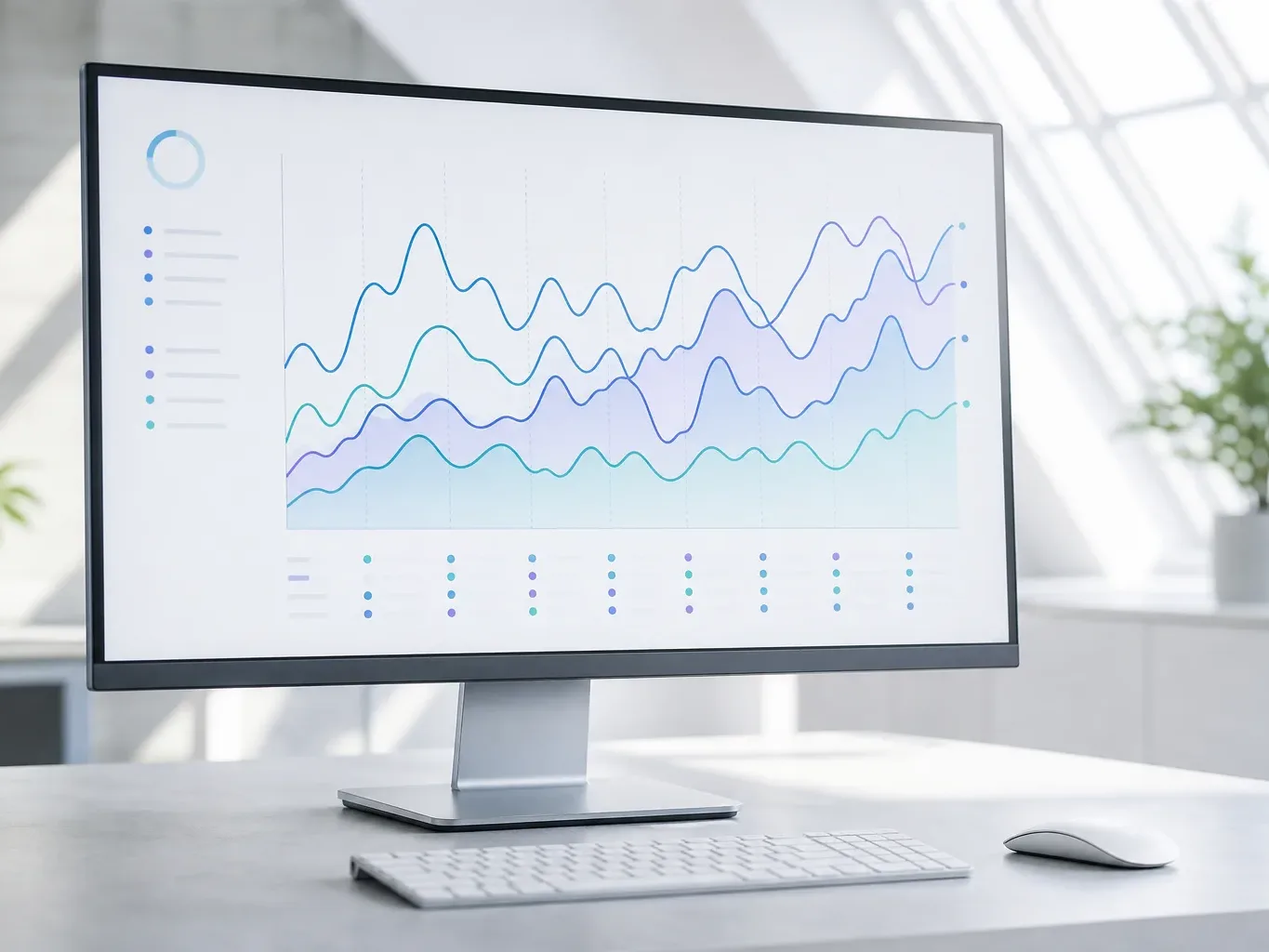
Raw mention volume is rarely the most useful metric. Sentiment trend over time, share of voice compared to competitors, and response rate performance give you a clearer picture of your actual reputation health. Businesses that actively respond to reviews typically see a 0.1–0.3 star improvement in their average rating, which can push a borderline 3.4-star profile above the critical 3.5-star threshold where consumer rejection becomes statistically significant.
Monitor your competitors too. Most of the tools above let you track competitor brand names alongside your own. If a competitor starts receiving a spike of negative mentions around a specific product issue, that's directly useful market intelligence.

Pairing Tools with a Response Strategy
Tracking mentions without a clear response process is like reading your emails without replying to them. Decide in advance who responds to what: social media complaints, review site feedback, and news coverage each warrant different voices and timelines. Aim to respond to negative reviews within 24 hours; reviews that sit unanswered past 48 hours signal to other readers that the business doesn't care.
For situations where damaging content is already ranking on the first page of Google, search result suppression through targeted content creation is the realistic solution. That process typically takes 3–6 months to produce measurable movement, and full displacement of stubborn negative results can take 6–12 months. A monitoring tool won't fix historical damage on its own, but it stops new problems from compounding unnoticed.
Frequently Asked Questions
How Does Brand Mention Tracking Work?
Brand mention tracking tools use automated web crawlers and API connections to scan social media platforms, news sites, blogs, forums, and review sites for any text matching your chosen keywords. When a match is found, the tool logs it and sends you an alert, often in real time or within a few minutes of the mention going live. Most platforms also apply sentiment analysis to classify mentions as positive, negative, or neutral, so you can prioritize responses without reading every result manually.
What Is the Difference Between a Free and a Paid Brand Mention Tracking Tool?
Free tools like Google Alerts cover only publicly indexed web pages and typically exclude social media, forums, and paywalled news sources. Paid tools in the $50–$300 per month range add real-time social monitoring, sentiment scoring, competitor tracking, and reporting dashboards. Enterprise platforms costing $500–$5,000+ per month go further with image recognition, historical data access, multi-language sentiment, and integrations with CRM and analytics systems.
How Quickly Can I Expect to Receive Brand Mention Alerts?
Alert speed varies significantly by tool and source type. Social media mentions on platforms like Twitter or Facebook can surface within seconds to a few minutes on tools such as Mention or Brand24. Web content indexed by search engines may take longer, sometimes several hours, because indexing itself is not instant. If real-time alerts are critical for your business, choose a tool that explicitly advertises real-time social monitoring rather than relying on daily digest emails.
Can Brand Mention Tracking Tools Help Remove Negative Content?
Tracking tools identify where negative content exists but do not remove it. Removal requires a separate process: you can submit a content removal request to Google or the hosting site, though removal is never guaranteed since each request is evaluated against platform policies. Specialist firms that pursue manual removal requests typically charge $100–$500 per URL. For content that can't be removed, search result suppression through new positive content is the realistic alternative, with measurable results usually appearing after 3–6 months.
How Many Brand Mentions Should I Track at Once?
Start with your brand name, common misspellings, your top products or services by name, and the names of key executives if they represent the company publicly. Adding competitor names gives you useful market context. Most SMB-tier tools cap keyword slots between 3 and 10 per plan, so prioritize terms that directly affect purchase decisions. Tracking too many broad terms creates noise that makes it harder to spot genuinely important mentions.